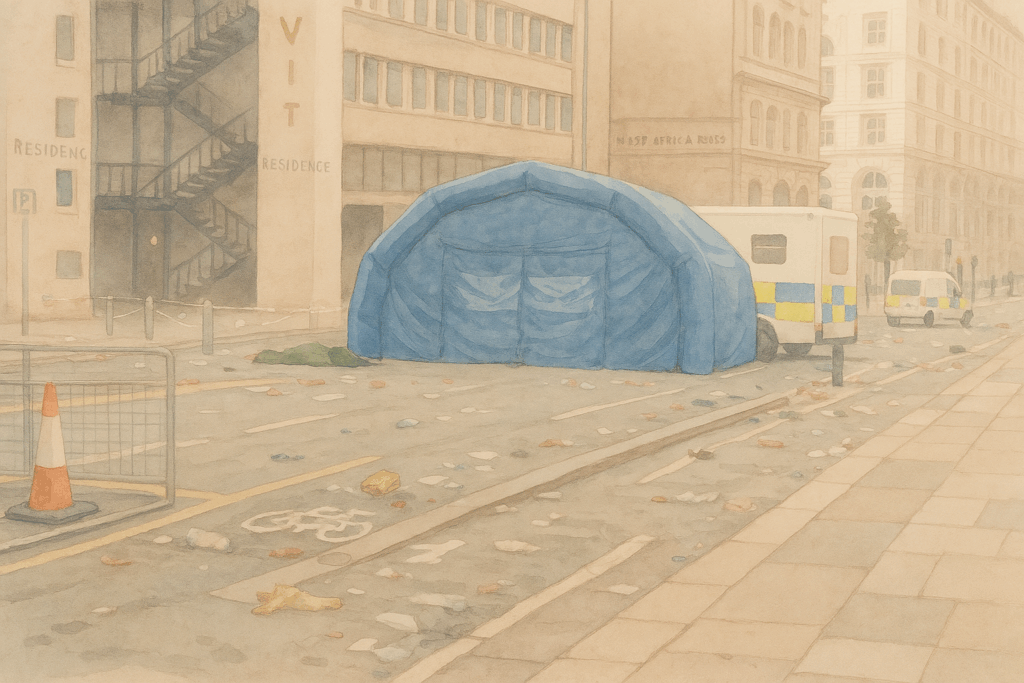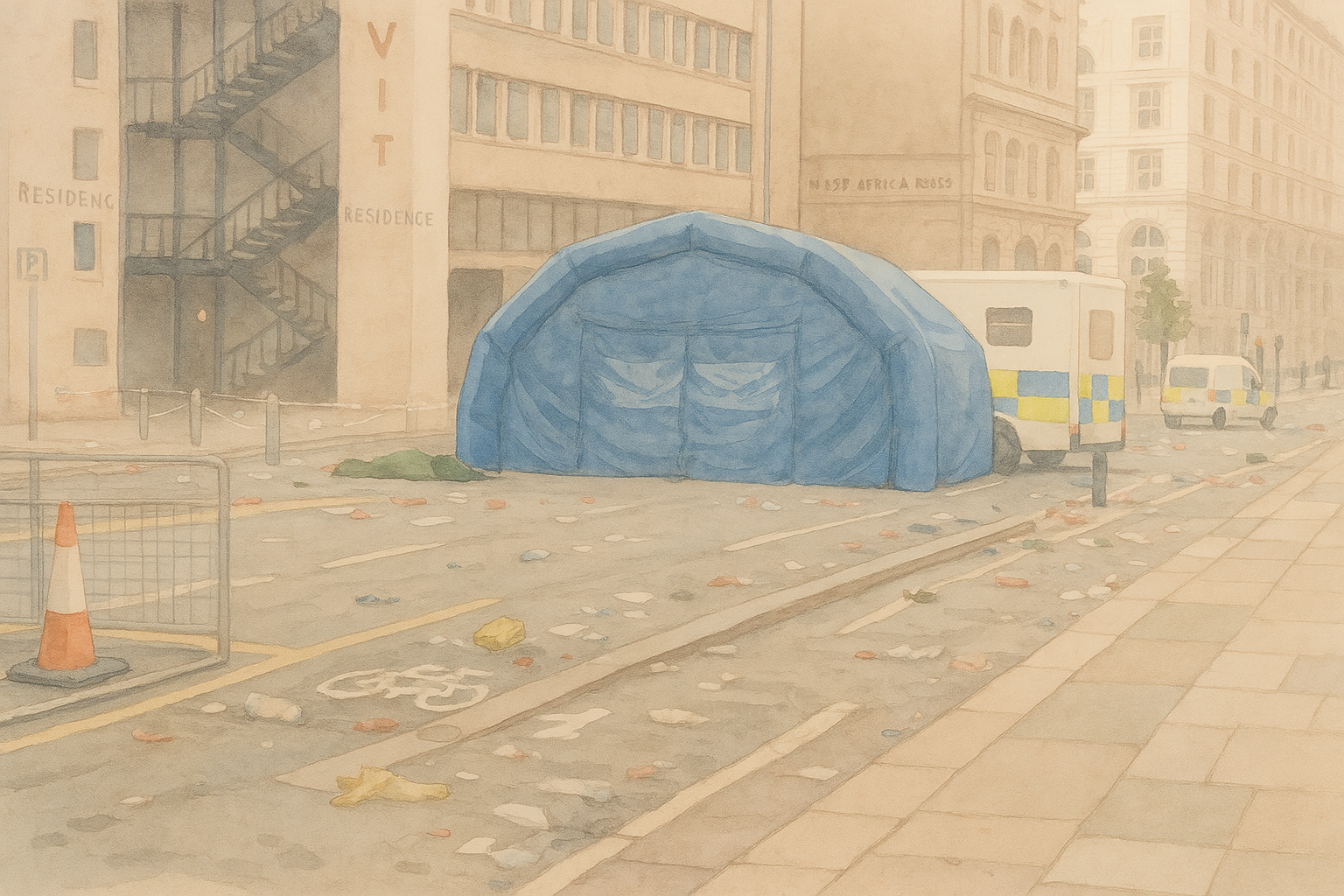
Mayor of Liverpool City Region Steve Rotheram says the police were 'fantastic' in the face of 'nefarious' speculation. https://t.co/TC2ROCL7wW
— Sky News (@SkyNews) May 27, 2025
📺 Sky 501, Virgin 602, Freeview 233 and YouTube pic.twitter.com/8D35b2cUEp
Από μια ανήσυχη μητέρα στο Λίβερπουλ
Ήμουν εκεί εκείνη την ημέρα. Στην αρχή της παρέλασης, με τον σύζυγό μου και τους δύο γιους μας. Όπως χιλιάδες άλλοι, γιορτάζαμε. Τραγουδούσαμε. Κουνάγαμε σημαίες. Για μια φορά, το Λίβερπουλ ένιωθε ξανά σαν μια μεγάλη οικογένεια – χαρούμενη, περήφανη, ενωμένη.
Και μετά, οι σειρήνες.
Όταν έμαθα τι συνέβη – ότι ένας άνδρας πέρασε με το αυτοκίνητο μέσα από το πλήθος των εορτασμών – πάγωσα. Όχι επειδή ήταν αδιανόητο (μετά το Χίλσμπορο, ο φόβος αυτός δεν φεύγει ποτέ), αλλά γιατί μόλις λίγα λεπτά νωρίτερα είχα πει στον σύζυγό μου: «Αυτός ο δρόμος δεν είναι ασφαλής. Υπάρχει υπερβολική κίνηση πίσω μας».
Αυτό δεν ήταν απλώς μητρικό άγχος. Ήταν ένστικτο.
Γιατί αυτός ο δρόμος ήταν ανοιχτός;
Αυτό ήταν το πρώτο ερώτημα που μου ήρθε στο μυαλό. Όχι η φυλή. Όχι η καταγωγή. Αλλά η ασφάλεια. Ποιος αποφάσισε να μείνει ανοιχτός αυτός ο δρόμος, τη στιγμή που χιλιάδες άνθρωποι συγκεντρώνονταν;
Διδάσκουμε στα παιδιά μας ότι οι δρόμοι μπορεί να είναι επικίνδυνοι, αλλά εκείνη την ημέρα – με τέτοιο σχεδιασμό και παρουσία της αστυνομίας – περιμέναμε κάτι καλύτερο. Θέλω να μάθω ποιος ήταν υπεύθυνος. Και δεν είμαι η μόνη.
Η Σάρλοτ Χένεσι, της οποίας ο πατέρας πέθανε στο Χίλσμπορο, είπε το ίδιο. Αν κάποια που έχει βιώσει τις συνέπειες της κακής οργάνωσης εξακολουθεί να θέτει αυτά τα ερωτήματα, τότε κάτι πήγε στραβά.
Το ζήτημα της ταυτότητας
Αυτό που με αναστάτωσε ως μητέρα – και ως πολίτη – ήταν το πόσο γρήγορα η αστυνομία ανακοίνωσε τη φυλή και την εθνικότητα του υπόπτου: «ένας 53χρονος λευκός Βρετανός».
Δεν θυμάμαι να συνέβη κάτι αντίστοιχο σε παλιότερες υποθέσεις. Όταν τρία κορίτσια δολοφονήθηκαν στο Σάουθπορτ πέρσι, χρειάστηκαν μέρες. Στο μεταξύ, επικίνδιες φήμες εξαπλώθηκαν στο διαδίκτυο – πολλοί κατηγορούσαν ψευδώς μουσουλμάνους ή αιτούντες άσυλο. Το αποτέλεσμα; Βίαιες διαδηλώσεις, χάος, φασιστικές ομάδες στους δρόμους.
Καταλαβαίνω τι εννοεί ο Νταλ Μπάμπου, πρώην επιθεωρητής της Μητροπολιτικής Αστυνομίας, όταν λέει πως η Αστυνομία του Μέρσεϊσαϊντ προσπαθούσε να αποτρέψει μια νέα κρίση. Αλλά αν η φυλή αναφέρεται μόνο για να καταπραΰνει την ακροδεξιά, τότε μήπως το ίδιο το σύστημα ενισχύει το πρόβλημα;
Ως μητέρα προσπαθώ να μάθω στα παιδιά μου τι σημαίνει δικαιοσύνη. Πώς να τους εξηγήσω ότι η καταγωγή κάποιου μπορεί να αποκαλύπτεται μόνο όταν αυτό εξυπηρετεί έναν επικοινωνιακό ή πολιτικό στόχο;
Αλήθεια απέναντι στη φήμη
Ο δήμαρχος του Λίβερπουλ επαίνεσε την αστυνομία για την άμεση αντίδρασή της απέναντι στις ψευδείς αφηγήσεις. Το κατανοώ. Σήμερα, η παραπληροφόρηση εξαπλώνεται πιο γρήγορα και από φωτιά. Εκτιμώ την ανάγκη για διαφάνεια. Αλλά όχι επιλεκτική.
Δεν χρειαζόμαστε περιστασιακή διαφάνεια – χρειαζόμαστε συστηματική διαφάνεια. Να λέγεται η αλήθεια στο κοινό – όχι μόνο όταν φοβόμαστε ταραχές, αλλά πάντα. Αλλιώς, η εμπιστοσύνη στους θεσμούς χάνεται. Και χωρίς εμπιστοσύνη, κανείς μας δεν αισθάνεται ασφαλής – πόσο μάλλον τα παιδιά μας.
Στην καρδιά του προβλήματος είναι οι άνθρωποι στο πλήθος
Όσο κάποιοι μαλώνουν στο διαδίκτυο για φυλές και κίνητρα, εγώ σκέφτομαι τις μητέρες που στέκονταν στη Λεωφόρο Μένλαβ, κρατώντας σφιχτά τα χέρια των παιδιών τους όταν ένα τεράστιο λεωφορείο πέρασε δίπλα τους. Σκέφτομαι τον πατέρα που τράβηξε το παιδί του από τον δρόμο. Το αγόρι που ρώτησε: «Μαμά, θα είμαστε καλά;»
Τους χρωστάμε κάτι παραπάνω από hashtags και τίτλους.
Τους χρωστάμε απαντήσεις. Και πιο ασφαλείς δρόμους.
After Liverpool: A Mother’s Questions About Safety, Trust, and the Role of Truth
When fear meets misinformation, it’s our children who stand in the middle.
By a concerned mother in Liverpool
I was there that day. At the start of the parade, with my husband and my two sons. Like thousands of others, we were celebrating. Singing. Waving flags. For once, Liverpool felt like one big family again—joyful, proud, united.
And then, the sirens.
When I heard what had happened—that a man drove through crowds in the middle of the celebrations—I froze. Not out of shock that something like this could happen (after Hillsborough, you never fully forget that fear), but because I had warned my husband just minutes earlier: “This road isn’t safe. There’s too much traffic behind us.”
That wasn’t just a mother’s anxiety. It was instinct.
Why was that road open?
This is the first question I asked. Not about race. Not about politics. But about safety. Who made the decision to leave that street accessible to cars while thousands were gathered?
We teach our kids that streets can be dangerous, but surely, on a day like this—with city-wide coordination and police presence—we expected better. I want to know who was responsible. And I’m not alone in that.
Charlotte Hennessy, whose father died at Hillsborough, voiced the same concern. If she, someone who has lived through the consequences of poor planning, is still asking these questions, then something clearly went wrong.
The issue of identity
What troubled me deeply as a mother—and as a citizen—was how fast the police announced the suspect’s race and nationality: “a 53-year-old white British male.”
I don’t recall such immediate identification in previous cases. When three girls were murdered in Southport last year, it took days. During that silence, harmful rumours spread like wildfire—many falsely blaming asylum seekers or Muslims. The result? Protests, chaos, even violence.
So I understand what Dal Babu, former chief inspector at the Met, meant when he said the Merseyside Police were trying to prevent a repeat of that dangerous spiral. But still—what does it mean when race is reported only to stop far-right speculation? Doesn’t that reinforce the problem?
As a mother, I try to raise my children to believe in fairness. But how do I explain to them that someone’s background might only be reported publicly if it serves a political or public safety strategy?
Truth versus speculation
Liverpool’s mayor praised the police for acting fast “to counter false narratives.” I respect that. In today’s world, misinformation spreads faster than fire. But while I value truth, I also value consistency.
What we need isn’t selective transparency—we need systematic transparency. Tell the public the truth—not just when you fear a riot, but always. Otherwise, trust in institutions erodes. And without trust, none of us feel safe—especially not our children.
In the end, it’s about the people in the crowd
While some debate on social media about ethnicity or motive, I’m still thinking about the mothers standing on Menlove Avenue, gripping their kids’ hands tighter when a massive bus squeezed by. I’m thinking about the father who had to push his daughter back onto the pavement. About the boy who asked, “Mum, are we going to be okay?”
We owe them more than hashtags and headlines.
We owe them answers. And safer streets.