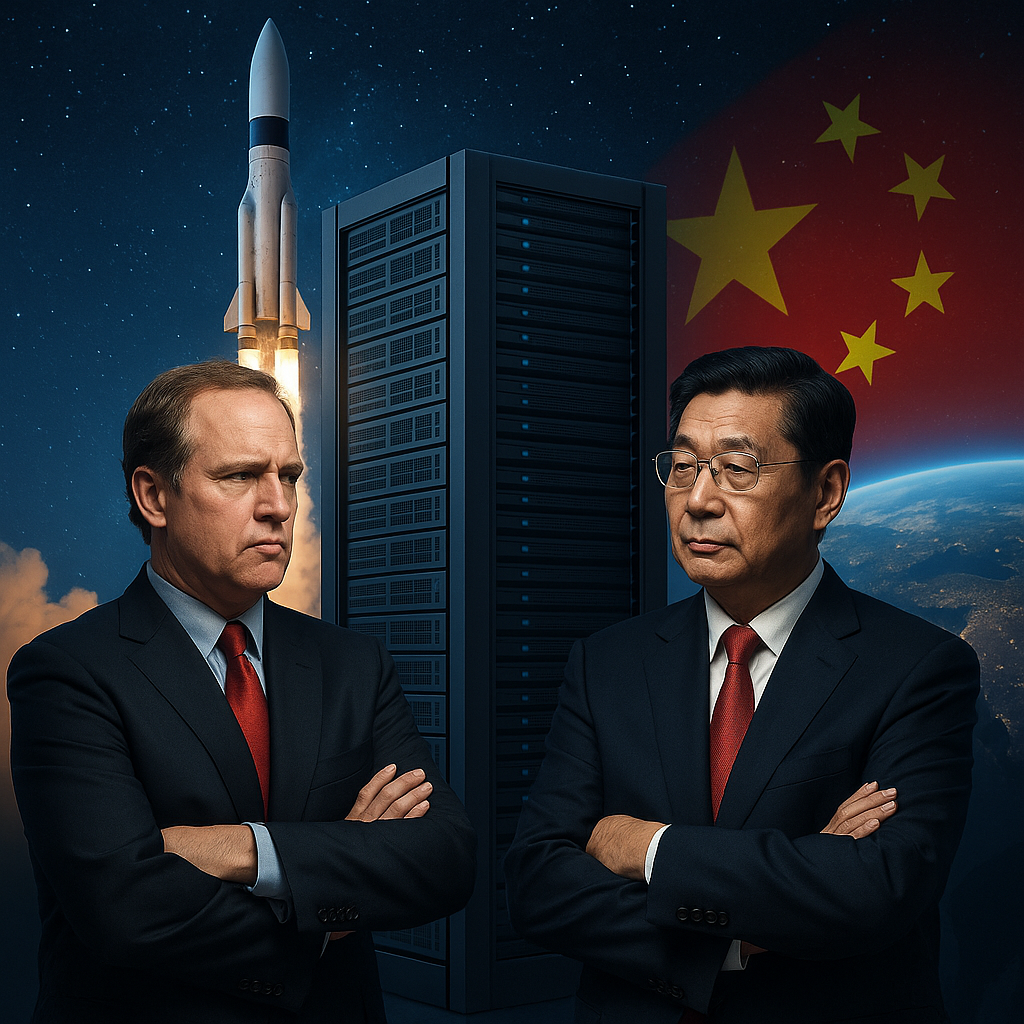
Ως Έλληνας επιχειρηματίας, παρακολουθώ με αμείωτο ενδιαφέρον –και έναν υπόγειο προβληματισμό– την εντεινόμενη τεχνολογική κούρσα ανάμεσα στις ΗΠΑ και την Κίνα. Από την τεχνητή νοημοσύνη μέχρι την κυριαρχία στο Διάστημα, οι δύο υπερδυνάμεις δεν ανταγωνίζονται απλώς για την καινοτομία· ανταγωνίζονται για το μέλλον του πλανήτη.
Στις 21 Μαΐου, ο Αμερικανός αντιπρόεδρος χαρακτήρισε την AI ως «αγώνα εξοπλισμών», υπονοώντας πως όποιος καθυστερήσει, χάνει την ελευθερία του. Και ενώ οι Αμερικανοί επιχειρηματίες πιέζουν για λιγότερη ρύθμιση και περισσότερη ανάπτυξη, η Κίνα –λιγότερο θορυβώδης αλλά βαθιά στοχευμένη– εστιάζει στην πρακτική εφαρμογή της AI: βιομηχανία, λιανεμπόριο, καθημερινές υπηρεσίες.
Ως Ευρωπαίοι, και δη Έλληνες, βρισκόμαστε σε ένα κρίσιμο σταυροδρόμι. Αν συνεχίσουμε να είμαστε θεατές αυτού του γεωτεχνολογικού διπόλου, θα βρεθούμε εξαρτημένοι και οικονομικά παθητικοί. Αν, όμως, κινηθούμε έξυπνα, με στρατηγικές επενδύσεις στην AI, μπορούμε να διαμορφώσουμε εθνικές λύσεις με παγκόσμια δυναμική.
Η Κίνα επενδύει σε μικρότερα, ευέλικτα μοντέλα. Οι ΗΠΑ ποντάρουν σε γιγάντια LLMs. Η Ευρώπη και η Ελλάδα μπορούν να ποντάρουν στη «νοημοσύνη της εφαρμογής»: την τεχνητή νοημοσύνη που λύνει προβλήματα – στην υγεία, στην εκπαίδευση, στις έξυπνες πόλεις.
Η μάχη αυτή δεν είναι μόνο για τις αγορές. Είναι για το ποιος θα γράψει τον επόμενο κώδικα που θα ελέγχει την καθημερινότητά μας. Και αυτός ο κώδικας, αν δεν τον γράψουμε εμείς, θα μας γραφτεί.
————————————–
The Tech War: Doing Business in the Age of Artificial Intelligence
From Washington to Beijing, global business must choose sides, strategies, and visions
As a Greek entrepreneur, I observe the growing tech race between the US and China with both fascination and strategic concern. From artificial intelligence to space supremacy, these superpowers are not merely racing for innovation—they are competing for the reins of the future.
On May 21, the American Vice President called AI development a “new arms race,” warning that hesitation might lead to technological subjugation. In parallel, while American companies lobby for deregulation and dominance, China, quieter but methodical, focuses on real-world AI applications: factories, logistics, consumer services.
Europe—and Greece in particular—stands at a vital crossroads. If we remain spectators in this emerging geotechnological bipolarity, we risk dependency and economic marginalization. But if we act strategically and invest smartly in AI, we can create national solutions with global value.
China bets on smaller, application-driven models. The US invests in massive LLMs. Europe, and especially Greece, could focus on applied intelligence: AI that solves tangible problems in health, education, mobility, and public administration.
This is not just a market competition—it’s a battle for the code that will run our lives. And if we don’t write that code ourselves, it will be written for us—and not necessarily in our best interest.