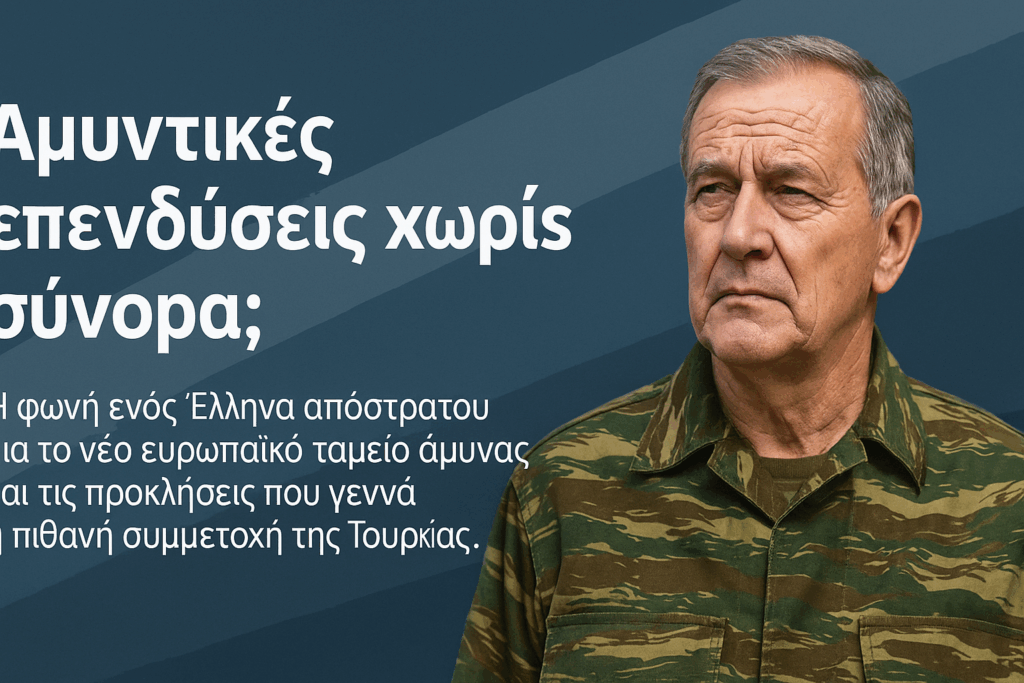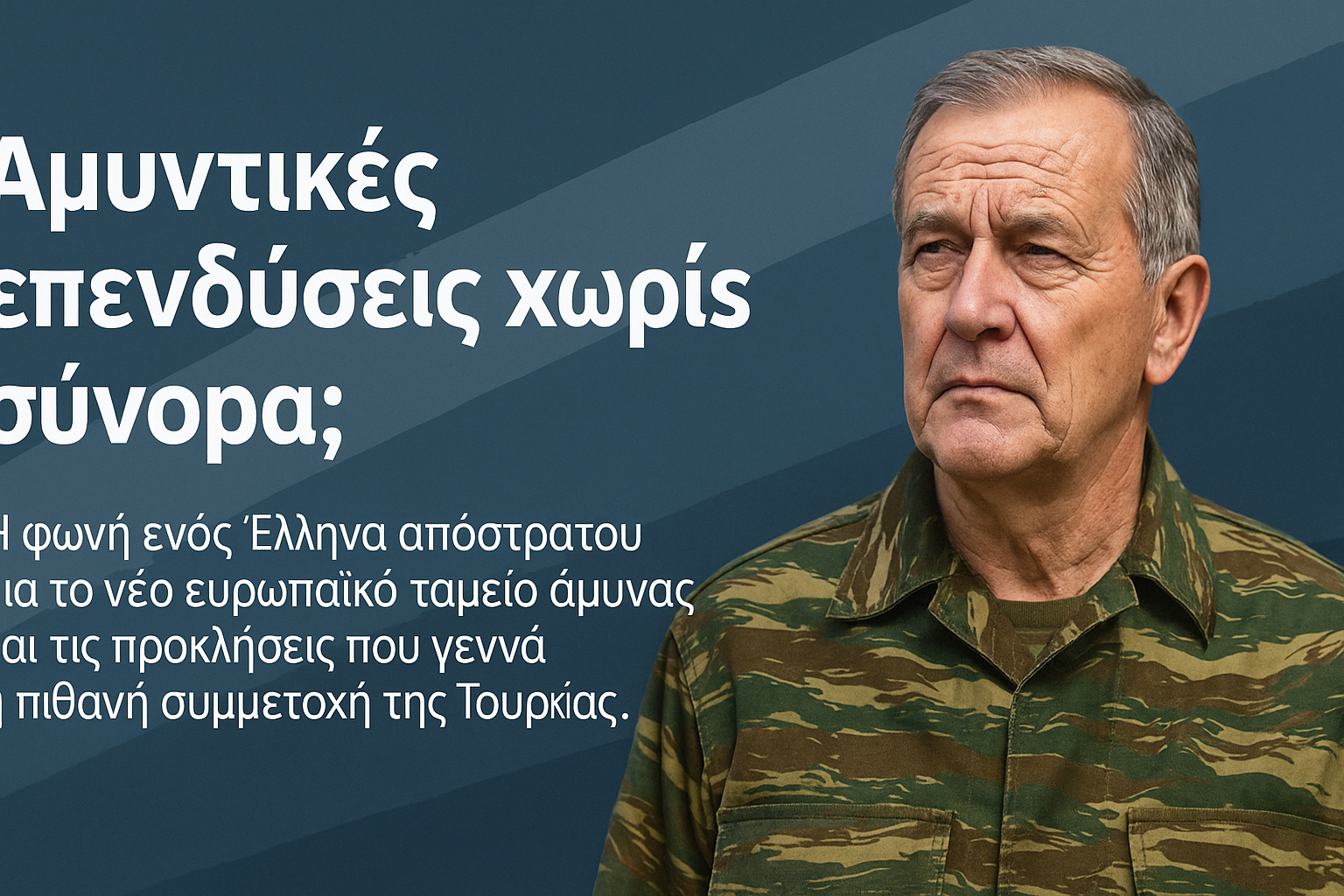
Γράφει απόστρατος αξιωματικός των Ελληνικών Ενόπλων Δυνάμεων
Ως άνθρωπος που υπηρέτησε στις Ένοπλες Δυνάμεις της Ελλάδας για πάνω από τρεις δεκαετίες, έχω δει από κοντά τις προκλήσεις και τις απειλές που διαμορφώνουν το αμυντικό τοπίο της Ευρώπης. Η πρόσφατη δημιουργία του νέου ταμείου SAFE από την Ευρωπαϊκή Ένωση – ενός χρηματοδοτικού εργαλείου ύψους 150 δισεκατομμυρίων ευρώ για κοινές αμυντικές επενδύσεις – αποτελεί αναμφίβολα ένα σταθμό. Όμως, την ίδια στιγμή, απαιτεί προσοχή, καθαρότητα και στρατηγική επίγνωση.
Στη θεωρία, το SAFE μοιάζει ως το πολυπόθητο βήμα προς την ευρωπαϊκή στρατηγική αυτονομία. Ένα κοινό ταμείο για τη χρηματοδότηση εξοπλισμών, μέσω χαμηλότοκων δανείων, σε χώρες που θα προχωρούν σε κοινές προμήθειες. Στην πράξη, όμως, κάθε τέτοια πρωτοβουλία πρέπει να συνοδεύεται από σαφές αξιακό και γεωπολιτικό πλαίσιο.
Η Τουρκία ως «εταίρος»;
Η πιθανότητα συμμετοχής τρίτων χωρών – και συγκεκριμένα της Τουρκίας – εγείρει εύλογους και σοβαρούς προβληματισμούς. Παρότι ο κανονισμός εξαιρεί χώρες που απειλούν συμφέροντα της ΕΕ ή κράτους-μέλους, το γεγονός ότι η Άγκυρα αναφέρεται έστω και υπό όρους, αποδυναμώνει το ίδιο το μήνυμα της ευρωπαϊκής αλληλεγγύης.
Η Τουρκία παραμένει υποψήφια για ένταξη στην ΕΕ. Είναι και μέλος του ΝΑΤΟ. Όμως καθημερινά παραβιάζει τον ελληνικό εναέριο χώρο, αμφισβητεί κυριαρχικά μας δικαιώματα, και συνεχίζει να κατέχει έδαφος της Κυπριακής Δημοκρατίας, που είναι πλήρες μέλος της Ένωσης. Μπορούμε, λοιπόν, να της αναθέσουμε τον ρόλο του «συνεταίρου» στην αμυντική βιομηχανία της Ευρώπης;
Ως στρατιωτικός, ξέρω καλά πως η άμυνα απαιτεί εμπιστοσύνη, διαλειτουργικότητα και κοινούς στρατηγικούς στόχους. Αυτά δεν μπορούν να συνυπάρξουν με εχθρικές προθέσεις ή ασύμβατες γεωπολιτικές στοχεύσεις.
Ενοποίηση ή πίεση στους μικρούς;
Η κοινή προμήθεια ως προϋπόθεση για πρόσβαση στα κονδύλια του SAFE μπορεί να φέρει οικονομίες κλίμακας, αλλά ενδέχεται να μετατραπεί σε πίεση για τα μικρότερα κράτη. Πίεση να ευθυγραμμιστούν με τα σχέδια και τις προτεραιότητες των ισχυρότερων εταίρων, ακόμη κι αν αυτά δεν εξυπηρετούν τις δικές τους αμυντικές ανάγκες.
Η ευρωπαϊκή ενοποίηση δεν πρέπει να σημαίνει απώλεια εθνικής κυριαρχίας στα κρίσιμα θέματα της άμυνας και της ασφάλειας.
Θωράκιση με στρατηγική, όχι με αυταπάτες
Υποστηρίζω πλήρως την ενίσχυση της ευρωπαϊκής αμυντικής συνεργασίας. Η Ευρώπη πρέπει να απαλλαγεί από την εξάρτηση της ασφάλειάς της από τρίτους, ακόμα και από τους συμμάχους της. Αλλά ισχυρή Ευρώπη σημαίνει συνοχή, διαφάνεια και στρατηγικό ρεαλισμό.
Το SAFE είναι ο πρώτος πυλώνας της Λευκής Βίβλου για την Άμυνα και του σχεδίου ReArm Europe που φιλοδοξεί να κινητοποιήσει πάνω από 800 δισ. ευρώ έως το 2030. Τα νούμερα εντυπωσιακά. Αλλά αυτό που μετρά δεν είναι μόνο πόσα ξοδεύουμε, αλλά πού, με ποιους και γιατί.
Ως κάποιος που υπηρέτησε στα σύνορα της πατρίδας του, σήμερα υψώνω τη φωνή μου για την άμυνα της ψυχής της Ευρώπης.
Ας επενδύσουμε στην ασφάλεια – όχι στην αφέλεια.
Defence Investments Without Borders?
A Greek veteran’s voice on the EU’s new defence fund and the concerns surrounding Turkey’s potential participation.
by a retired Greek Army Officer
As someone who served in the Greek armed forces for over three decades, I’ve witnessed firsthand the challenges and threats that define modern European security. The recent creation of the SAFE fund by the European Union—an unprecedented €150 billion financing tool for common defence investments—is a milestone. But it’s also a moment that demands clarity, prudence, and above all, strategic foresight.
On paper, SAFE appears to be a much-needed leap forward. A shared pool of low-interest, long-term loans designed to support joint procurements and strengthen Europe’s fragmented defence industries. In principle, this is a step towards greater unity and self-reliance in a volatile geopolitical landscape.
But unity must not come at the expense of coherence.
The question of Turkey
The inclusion of third countries—potentially including Turkey—raises deep and legitimate concerns. As per the regulation, participation from countries that “threaten the interests of the EU or a member state” should be excluded. But the fact that Turkey is even mentioned as a possible participant under bilateral agreements sends the wrong signal.
Turkey may be a NATO member and a candidate for EU accession, but it has consistently challenged the sovereignty of member states like Greece and Cyprus. It violates airspace, occupies part of an EU-recognized state, and militarizes tension in the Aegean. How then can such a country be considered a “partner” in the sensitive realm of joint defence capability?
From a military perspective, this is not just a political question—it is a matter of operational trust. Defence collaboration requires interoperability, intelligence sharing, and shared strategic goals. These cannot exist where there is underlying hostility or mistrust.
Common defence or common dependence?
Another concern is the potential for fragmentation hidden behind the illusion of unity. If joint procurement becomes an EU requirement for accessing SAFE funds, smaller or strategically vulnerable countries may be pressured into collaborations that do not serve their own national security interests but rather the industrial agendas of larger EU powers.
While pooling resources is essential, sovereignty must be preserved—particularly in matters as critical as defence planning and weapons development.
Additionally, imposing strict limitations on third-country components—while allowing exceptions for EFTA states and Ukraine—makes sense. But what oversight will exist to ensure compliance? Who determines the strategic value of a component or the origin of its technology?
Europe must arm smartly, not blindly
Let us be clear: I support a strong European defence identity. I have long believed that Europe must wean itself off dependence on foreign powers, including the United States, for its most vital security needs.
But a strong Europe is not one that compromises on the values of integrity, transparency, and strategic awareness. SAFE must not become another bureaucratic machine that funds equipment while ignoring the political and military realities on the ground.
The first pillar of the White Paper on European Defence is here. The ambitions are grand—over €800 billion in mobilized defence investments by 2030. But what matters is not just how much we spend, but where, with whom, and for what purpose.
As a soldier who once defended the borders of my nation, I now raise my voice for the defence of Europe’s soul.
Let us invest in security, not in short-sighted appeasement.