Το τελευταίο διάστημα η κυβέρνηση αντιδρά νευρικά και επιθετικά κάθε φορά που ακούγεται η λέξη «συγκάλυψη» σε σχέση με την τραγωδία των Τεμπών. Ο κυβερνητικός εκπρόσωπος μιλά για «αφήγημα συνωμοσιολογίας» και απορρίπτει συλλήβδην όσους θέτουν ερωτήματα ή επιμένουν να αναζητούν την αλήθεια. Όμως το ίδιο το βάρος των γεγονότων μιλάει διαφορετικά.
Συγκάλυψη δεν είναι ένας όρος-κατηγορία. Είναι μια περιγραφή συγκεκριμένων ενεργειών και παραλείψεων:
– Η θεωρία του «ανθρώπινου λάθους» που χρησιμοποιήθηκε ως ασπίδα πολιτικής ευθύνης.
– Η μονταζιέρα των ημερών εκείνων που στόχευε να προσανατολίσει αλλού την κοινή γνώμη.
– Η επιλεκτική επίκληση ή απόκρυψη πορισμάτων.
– Η υποβάθμιση κρίσιμων ερωτημάτων, όπως η έκρηξη που ακολούθησε τη σύγκρουση.
– Η στοχοποίηση όσων ζητούν διαφάνεια: δημοσιογράφων, συγγενών θυμάτων, ειδικών.
Η καθυστερημένη και απαλλακτική παραπομπή Καραμανλή δεν ήταν τυχαία. Η κυβέρνηση μεθόδευσε την αναγνώριση μόνο εκείνων των ευθυνών που δεν την αγγίζουν. Οι υπόλοιπες σκεπάστηκαν με σκόνη, βιασύνες και την ελπίδα ότι οι εκλογές θα σβήσουν τα ίχνη.
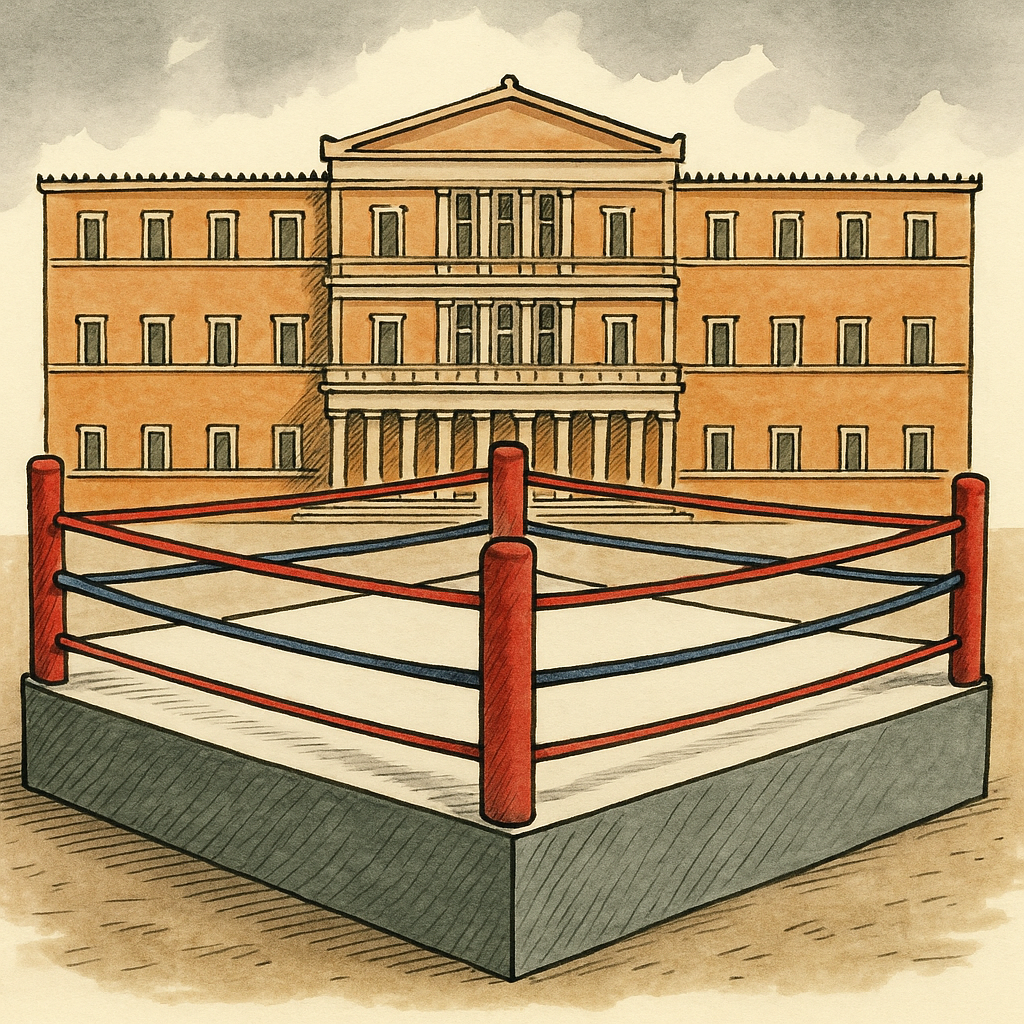
Όμως δεν σβήνουν. Γιατί η κοινωνία δεν ξεχνά. Η κυβέρνηση αντιμετωπίζει όχι μόνο την ιστορική αλλά και τη νομική της ευθύνη. Και αν η Βουλή μετατράπηκε σε εργαλείο συγκάλυψης, η κοινωνία είναι έτοιμη να μετατραπεί σε Δικαστήριο.
Όχι επειδή συνωμοτεί. Αλλά επειδή επιμένει να ζητά αλήθεια και δικαιοσύνη.
The Real Narrative is the Cover-Up
The government dismisses all questions on Tempi as conspiracy, but reality speaks louder than spin
Lately, the Greek government seems to erupt every time the word “cover-up” is mentioned in connection with the Tempi train tragedy. The government spokesperson speaks of a “conspiracy narrative” and ridicules anyone who questions the official version of events. But reality has a way of cutting through public relations.
A cover-up is not an abstract accusation—it is a set of concrete actions and omissions:
– Blaming “human error” to shield political responsibility.
– Media manipulation and rushed narratives to divert public outrage.
– Selective quoting (or silencing) of investigative reports.
– The refusal to engage with critical questions, such as the post-crash explosion.
– Smearing the victims’ families, journalists, and experts who demand answers.
The late and essentially exculpatory referral of Minister Karamanlis was no accident. It was part of a broader political choreography: to recognize only those responsibilities that don’t reach the heart of the government.
But they do reach it. Because four years of neglect led to two trains traveling on the same track toward disaster—with no safeguards, no systems, and no political will to prevent it.
The 2023 elections may have granted political time, but they did not erase the truth. Today, the government faces not just journalistic or parliamentary scrutiny—but public judgment.
Not because the people conspire. But because they remember. And they demand justice.
In the courtroom of real life, sentences are heavy. And often, final.