Πολύ πριν τα φώτα της πολιτικής σκηνής τον αναδείξουν σε πρωθυπουργό, ο Κυριάκος Μητσοτάκης είχε ήδη πρωταγωνιστήσει σε ένα από τα πρώτα σκάνδαλα με ευρωπαϊκές επιδοτήσεις – σκάνδαλο που αποκαλύπτεται σήμερα με ακόμα μεγαλύτερη ένταση λόγω των πρόσφατων εξελίξεων με τον ΟΠΕΚΕΠΕ και τον περιβόητο «Φραπέ».
Ανάμεσα στο 2001 και το 2003, ο νεαρός Μητσοτάκης, διορισμένος πρόεδρος και διευθύνων σύμβουλος της εταιρίας Iven A.E. (θυγατρική της Εθνικής Τράπεζας), κατηγορήθηκε για κακοδιαχείριση κοινοτικών κονδυλίων στο πλαίσιο του Γ’ ΚΠΣ. Με την παρέμβαση του πατέρα του, Κωνσταντίνου Μητσοτάκη, εξασφάλισε τη θέση, αλλά οδήγησε την εταιρία σε οικονομική κατάρρευση και εμπλοκή με τη Δικαιοσύνη.
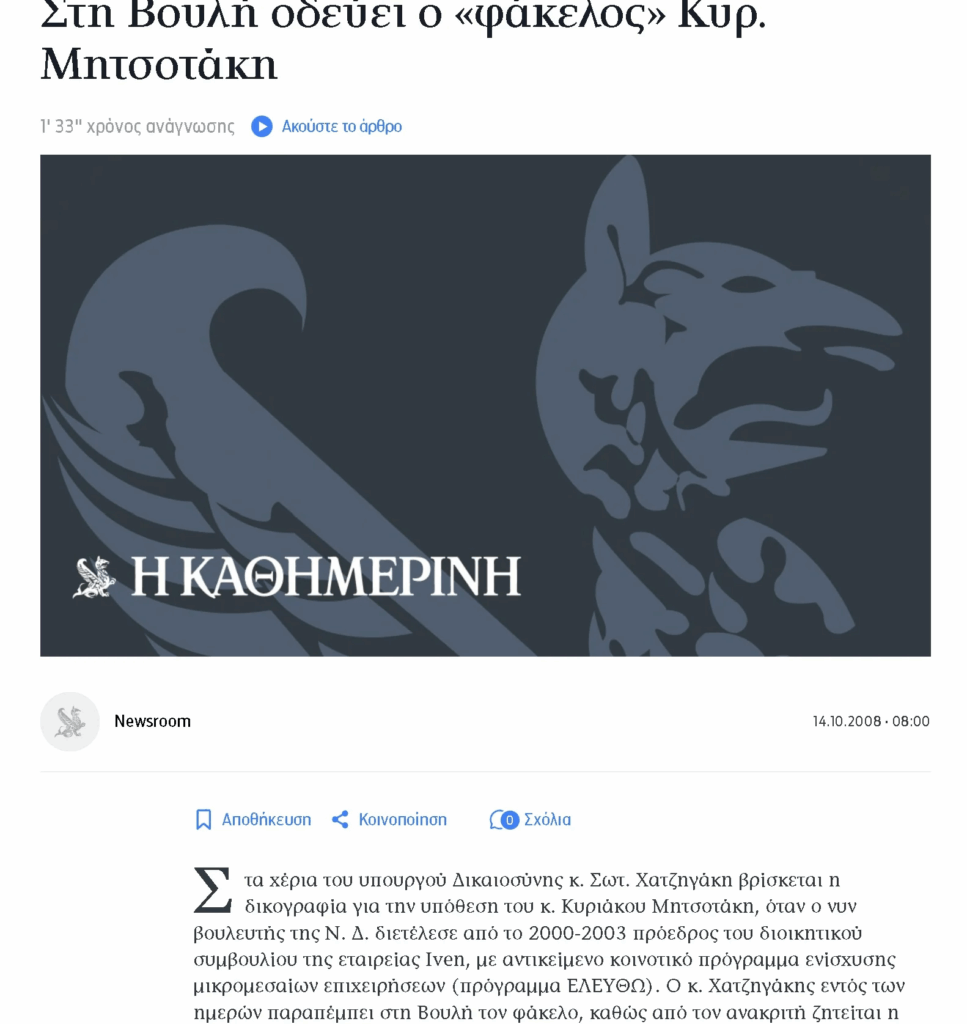
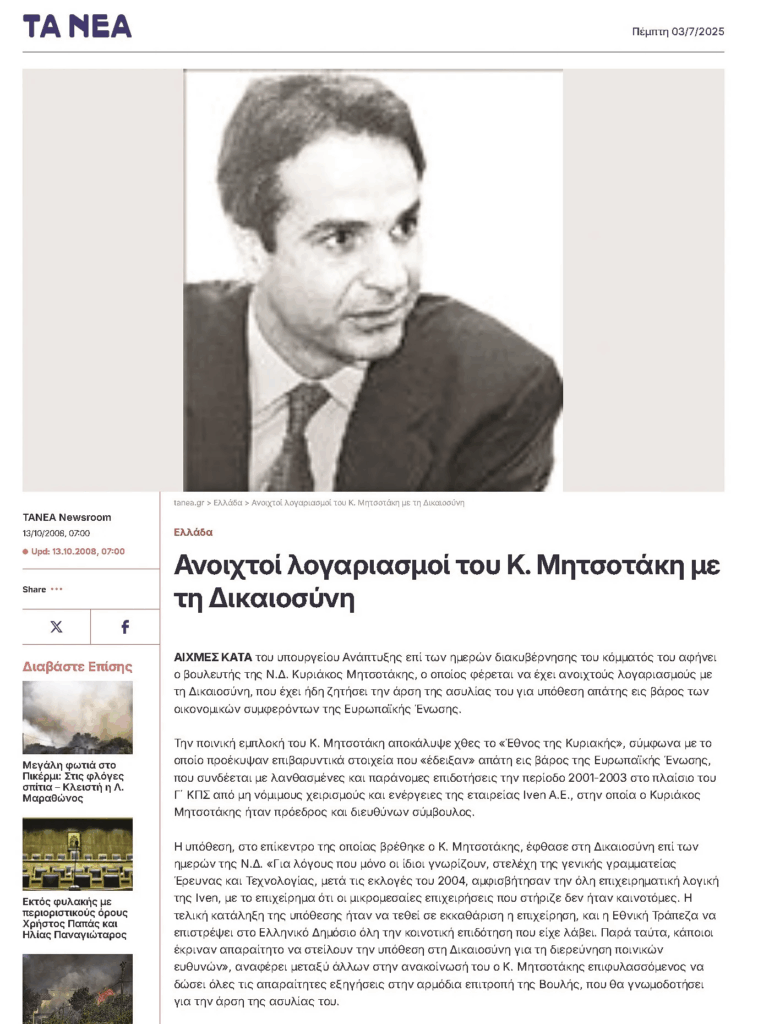
Το 2008, δημοσιεύματα των «Νέων» και του «Έθνους» αποκάλυψαν το παρασκήνιο της υπόθεσης: παράνομες επιδοτήσεις, ασύμβατες επιχειρήσεις και επιστροφή ευρωπαϊκών κονδυλίων από την Εθνική Τράπεζα. Το 2009, η Βουλή αρνήθηκε την άρση της ασυλίας του Μητσοτάκη, παρά την ύπαρξη δικογραφίας.
Ο Μητσοτάκης υποστήριξε τότε πως δεν υπήρξε ζημία για το Δημόσιο, όμως η υπόθεση άφησε σκιές. Η σύμπτωση πως και ο σημερινός «Φραπές» των ενισχύσεων (Ξυλούρης) ήταν κουμπάρος της οικογένειας Μητσοτάκη δίνει στην ιστορία μια τραγικά ειρωνική διάσταση.
Η πολιτική πορεία του σημερινού πρωθυπουργού ξεκίνησε, λοιπόν, όχι ως άριστου τεχνοκράτη, αλλά ως ενός προστατευμένου golden boy που «τσάκισε» δημόσιο και κοινοτικό χρήμα – κι όλα αυτά, προτού καν εκλεγεί βουλευτής.
Before Becoming Prime Minister — Mitsotakis and the EU Grant Scandal of Iven S.A.
We reveal how Kyriakos Mitsotakis, long before his political career began, was involved in a controversial misuse of European funds during his time as CEO of Iven S.A.
Long before Kyriakos Mitsotakis became Greece’s prime minister, he had already been at the center of a scandal involving EU subsidies — a case that bears eerie resemblance to today’s subsidy controversies surrounding OPEKEPE and the now-infamous “Frappe” man.
Between 2001 and 2003, Mitsotakis served as chairman and CEO of Iven S.A., a subsidiary of the National Bank of Greece. Appointed through political influence from his father, former Prime Minister Konstantinos Mitsotakis, Kyriakos was accused of mismanaging European funds under the 3rd Community Support Framework.
In 2008, major Greek newspapers like Ta Nea and Ethnos unveiled the case: misallocated grants, non-eligible businesses receiving funding, and the National Bank forced to return EU money. Despite the legal implications, the Greek Parliament in 2009 rejected the request to lift Mitsotakis’s parliamentary immunity.
At the time, Mitsotakis claimed no financial harm was caused to the state or the EU. However, the company’s bankruptcy, triggered during his tenure, told another story. The case faded quietly, but the political and ethical questions remain.
The irony deepens as we now know that the new “Frappe” figure, Giorgos Xylouris, is linked to the Mitsotakis family through marriage. The threads connecting these two scandals — past and present — are far from coincidental.
This was Mitsotakis’s only real job in the private sector before entering politics. And it ended not in success, but in disgrace and loss of EU taxpayer money. Far from being a capable technocrat, the young Mitsotakis revealed himself as a privileged political heir — one who played with public funds and walked away unscathed.
In a country where history is often repeated, perhaps the scandal of the past is the blueprint of the present.